Response index
Start with the claim you heard.
The objection comes first. Every completed entry includes a rapid answer and a deeper case, with the assumptions exposed instead of buried.
Answered now
51 response sets
Showing 51 responses
The Trinity Is Biblical Orthodoxy
The New Testament teaches the divinity of the Father, Son, and Holy Ghost, their real distinction, and their perfect unity. Latter-day Saints accept those claims while disputing that the fourth-century Nicene formula is the only faithful way to hold them together.
Sola Scriptura: Bible Is the Sole Authority
The Bible teaches its own inspiration, but it never says that a completed Bible will be the Church's only authority. Its pattern is scripture joined with apostles, prophets, the Holy Spirit, and a worshipping community.

Mormons Are Not Real Christians
Latter-day Saints worship Jesus Christ as the divine Son of God, risen Lord, Redeemer, and only source of salvation. Other Christians may reject LDS theology, but disagreement over later creeds does not make devotion to Christ disappear.
The Great Apostasy Never Happened
The "gates of Hades" in Matthew 16:18 are the power of death, not a guarantee that every later church office would continue without interruption. Christ broke those gates through His Resurrection. The verse promises death will not hold His people; it does not settle the separate historical question of apostolic authority.
Salvation by Grace Alone, Not Works
Latter-day Saints do not teach that anyone earns resurrection or forgiveness apart from Christ. Covenants, baptism, and obedience are ways of receiving and living in His grace, not a competing source of saving power.
Biblical Inerrancy and Sufficiency
The Bible can be inspired and authoritative without requiring every copyist, translator, or interpreter to be infallible. The Latter-day Saint position takes the Bible seriously while leaving room for textual history and for God to keep speaking.

Mormons Believe in Multiple Gods (Polytheism)
Latter-day Saints distinguish the Father, Son, and Holy Ghost while worshipping them as one perfectly united Godhead. The disagreement with Nicene Christianity concerns divine unity and being; calling it ordinary polytheism skips that distinction.
Canon Was Closed and No New Scripture Allowed
The warning in Revelation 22 concerns adding to that prophecy; it never says God has finished revealing scripture. The Bible contains no inspired table of contents and no verse announcing that future revelation has ended.
The Bible Says There Are No More Prophets
The Bible never announces the end of prophets. Jesus says He will send prophets, Acts names prophets after the Resurrection, Paul places prophets in Christ's Church, and Revelation still portrays prophetic witnesses. The New Testament rule is not to reject prophecy, but to test it and hold fast to what is good.
Joseph Smith's Polygamy Proves False Prophet
Joseph Smith's plural marriages are difficult history, but they were not all the same. Evidence supports sexual relations in some time-and-eternity marriages, not in every sealing. No child by a plural wife has been confirmed. Helen Mar Kimball was sealed to Joseph at fourteen; she later described the sealing as "for eternity alone," and there is no documentation that it was consummated.
LDS Church Changes Doctrine, Proving It False
Temple ceremonies and garment styles have changed, and the Church openly acknowledges those adjustments. Change in presentation does not automatically mean that every covenant or doctrine changed. The second anointing has a historical record but little current public explanation, so the honest response should distinguish documented history from rumor.
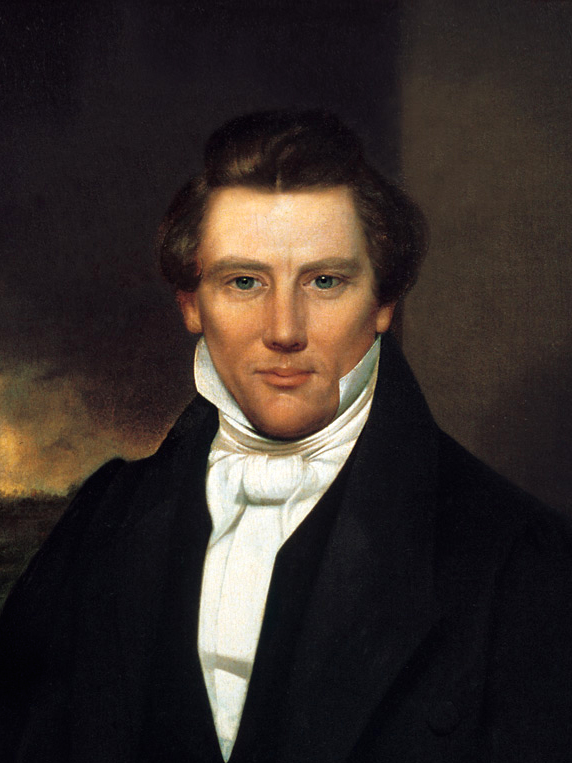
The First Vision Accounts Contradict Each Other
Joseph Smith left several accounts of the First Vision for different audiences and purposes. Their wording and emphasis vary, but the central event remains: he prayed, received a heavenly manifestation, and learned that God would direct him. Variation is not the same thing as contradiction, as the multiple accounts of Paul's conversion in Acts also show.
The Seer Stone and Hat Prove the Translation Was Fraudulent
The historical record says Joseph Smith used both the interpreters found with the plates and a seer stone, sometimes placing the instrument in a hat to block light. That sounds strange to modern ears, but strangeness does not decide whether revelation occurred. The biblical question is whether God may use physical instruments, and Scripture repeatedly says He may.
Church Finances, Ensign Peak, and the SEC
The Church holds very large reserves, and the SEC found that Ensign Peak used shell companies to obscure the Church's investment portfolio in required filings. The Church paid a settlement and said it regretted mistakes. A defense should not deny those facts. The remaining debate concerns transparency, stewardship, charitable priorities, and what obligations a church with substantial reserves should accept.
God Cannot Have a Physical Body
John 4:24 says God is spirit, but it does not add that spirit and glorified embodiment are mutually exclusive. Other passages describe people seeing God, so the whole biblical witness has to be read together.
The CES Letter Disproves the Restoration
The CES Letter raises many separate questions, so its cumulative force can feel stronger than any one argument. The responsible way to assess it is to separate the claims, check the cited source in context, identify what conclusion actually follows, and avoid counting the same underlying objection several times.
Deutero-Isaiah Disproves the Book of Mormon
Most critical scholars date Isaiah 40 through 55 to the Babylonian exile, which creates a real chronological question for the Book of Mormon. That conclusion is a historical reconstruction, not a manuscript labeled "Deutero-Isaiah." Latter-day Saint responses include earlier Isaianic material, later editorial development, and revelatory translation. None should be presented as settled proof.
Doctrine and Covenants 132 Is Coercive and Contradictory
Doctrine and Covenants 132 teaches eternal marriage, sealing authority, and plural marriage in the same revelation. The new and everlasting covenant is broader than polygamy, and the Church does not teach that plural marriage is presently required. The hard language to Emma and the rules for plural unions still deserve direct, verse-by-verse treatment.
Fanny Alger Was an Affair, Not a Plural Marriage
The evidence for Joseph Smith's relationship with Fanny Alger is late, fragmentary, and uncomfortable. Faithful sources identify it as an early plural marriage, while critics call it an affair. The record does not let us reconstruct every conversation with Fanny, her parents, or Emma, so a responsible defense should state what is known and leave disputed details disputed.
Joseph Smith Copied the Temple Endowment from Freemasonry
Joseph Smith introduced the Nauvoo endowment soon after becoming a Mason, and the ceremonies share some outward forms. The Church acknowledges that history. The question is whether borrowed teaching forms make the endowment a copy, or whether Joseph used familiar ritual language to present a different covenant theology centered on Christ, creation, fall, and return to God.
Joseph Smith's Treasure Seeking Proves Fraud
Joseph Smith did participate in treasure seeking and used a seer stone before the Book of Mormon translation. In 1826 he appeared before a justice of the peace, though surviving accounts disagree about the legal outcome and show no major penalty. The issue is not whether this happened, but whether an early folk practice proves that every later prophetic claim was fraudulent.
Mountain Meadows Proves the Church Was Violent
Latter-day Saint militiamen and local leaders committed the Mountain Meadows Massacre and then helped conceal it. The act was evil. Evidence does not show that Brigham Young ordered it, and his message to let the emigrants pass arrived too late, but inflammatory rhetoric and wartime fear helped create the setting in which local leaders made catastrophic choices.
Blood Atonement Proves Brigham Young Was a False Prophet
Brigham Young and other early leaders did preach a theory called blood atonement, often in severe language. The Church now rejects it and teaches that redemption comes through Jesus Christ. Historical evidence does not establish a Church program of executing apostates, but the rhetoric itself should not be denied or excused as harmless.
Calvinism and Predestination vs. LDS Free Will
Latter-day Saints read the Bible's calls to choose, repent, and endure as real invitations, not outcomes fixed in advance. Salvation begins and ends with Christ's grace, but grace does not make human response unreal.
Creation Ex Nihilo Is Biblical, Not LDS Materialism
Genesis says God created the heavens and the earth, but it does not plainly define creation as making matter from absolute nothing. Latter-day Saints read creation as God giving order, purpose, and life to what was unformed.

LDS Prophets Are Fallible and Therefore Untrustworthy
A prophet is not a person who never sins, misjudges, or needs correction. The biblical record treats calling and infallibility as different things, so the right questions concern authority, revelation, correction, and fruit.
Priesthood and Race Ban Proves False Prophets
The racial restriction and the theories used to defend it caused real harm, and the Church now disavows those theories. The issue is whether prophetic fallibility can include grave institutional error, a difficult question that should be faced directly rather than answered with either denial or caricature.
The Kinderhook Plates and Greek Psalter Exposed Joseph Smith
The Kinderhook plates were a hoax, and Joseph briefly examined them, but no completed or canonized translation was produced. The Greek Psalter story rests on the later published account of the man who set the test. These episodes should be examined, but neither is a documented repeat of the Book of Mormon translation process.
Atheism: No Evidence for God's Existence
Belief in God is not a claim that can be settled by pointing to one laboratory result. Latter-day Saints can appeal to several lines of evidence together: why anything exists, the order of the universe, moral experience, consciousness, scripture, and personal encounter with God.
B. H. Roberts Privately Disproved the Book of Mormon
B. H. Roberts investigated difficult Book of Mormon questions and presented them forcefully to Church leaders. That is not evidence he secretly disproved the book. His later public sermons continued to affirm the Book of Mormon as an ancient witness of Christ. His work shows that a believer can press hard questions without pretending they are harmless.
Baptism Is Not Necessary for Salvation
Jesus's promise to the thief shows His mercy; it does not cancel His wider teaching about baptism. Latter-day Saint belief in ministry to the dead explains how baptism can matter without condemning people who never had a fair chance to receive it.
Mormonism Is a Cult
"Cult" is often used as a verdict instead of a definition. A fair discussion should name the specific behavior being criticized and apply the same standard to other demanding religious communities.
Mormons Worship a Different Jesus
Latter-day Saints affirm the Jesus identified in the New Testament: born of Mary, crucified, risen, Creator, Messiah, and Savior. The dispute is about how His divine relationship with the Father should be described, not about replacing Him with another historical figure.
Free Will Impossible Under Classical Theism
If every human act is fixed by an eternal decree, it becomes harder to explain why our choices carry real moral weight. Latter-day Saint theology treats agency as a genuine feature of persons while still affirming God's knowledge and power.
LDS Femininity Critique and Patriarchal Structure
Only men are ordained to priesthood offices in current Church practice, while women exercise delegated authority in callings and officiate in priesthood ordinances in temples. Latter-day Saints also believe in Heavenly Parents, including a Mother in Heaven. Those teachings answer some caricatures, but they do not erase sincere questions about representation, authority, and gender.
LDS Subjective Epistemology Is Unreliable
A spiritual witness is part of Latter-day Saint knowledge, not a substitute for scripture, reason, history, or moral fruit. Like other forms of knowing, it requires patience, testing, and humility about what an experience does and does not establish.
Book of Abraham Translation Is Fraudulent
The surviving Joseph Smith Papyri are Egyptian funerary texts, not the English Book of Abraham. They are also only part of the collection Joseph owned. The recovered fragments disprove a simple translation from those pieces, but they do not settle what was on the missing papyri or how Joseph's revelatory translation worked.
Book of Mormon Contains 19th Century Theology
Parallels to Joseph Smith's environment deserve examination, but resemblance is not a demonstrated source. View of the Hebrews, the Spaulding manuscript, revival preaching, and other proposals differ from one another and often explain only a narrow slice of the Book of Mormon. A source theory needs evidence of access, dependence, and explanatory reach.
LDS God Concept Is Philosophically Atheistic
Latter-day Saints worship the Father as God and affirm His power, knowledge, holiness, and fatherhood. The disagreement is with some claims of classical metaphysics, not with the existence or divine authority of God.

Three Degrees of Glory Not Biblical
Paul distinguishes kinds of resurrected glory, and Jesus teaches differing rewards and degrees of accountability. Latter-day Saints read those passages alongside modern revelation as a fuller picture than a single undifferentiated heaven.
Book of Mormon Lacks Archaeological Evidence
There is no archaeological finding that proves the Book of Mormon, and members should not pretend otherwise. But uncertain geography and an incomplete record also mean that the absence of a decisive find is not, by itself, a disproof.
LDS Church Protects Abusers Through Clergy Privilege
Abuse must be reported and victims protected wherever the law permits or requires it. The Church's help line is meant to guide leaders through safety and reporting duties, but the Bisbee case raises grave questions about advice not to report a confessed abuser. The litigation remains active, so the facts, current policy, and legal claims must be kept separate.
No Golden Plates Evidence or Independent Translation
The witnesses are not a substitute for faith, but they are historical evidence. The Three described an angelic encounter, while the Eight described handling a physical object. Several later broke with Joseph Smith, yet none is known to have withdrawn the published testimony.
Original Sin and Children Born Sinful
Latter-day Saints distinguish inheriting mortality and a fallen world from inheriting Adam's personal guilt. Ezekiel 18 teaches individual accountability, and Jesus presents children as examples of kingdom readiness.
"Mormons Are Basically Muslims with an American Prophet"
A later prophet does not make a religion Islamic; prophets fill both Testaments. On the beliefs that define the Christian story, Latter-day Saints affirm Christ's divine Sonship, Incarnation, Atonement, Crucifixion, and bodily Resurrection, while Islam rejects them. Creedal Christianity actually overlaps with mainstream Islam on several premises it often uses against the Restoration, including final foundational revelation, creation from nothing, and divine incorporeality.
Can God create a person while knowing that person will suffer eternally and still will that person's good?
If God freely creates each person from nothing, knows who will suffer eternally, and could refrain from creating that person, simply invoking later free will does not explain why creation itself serves that person's good. Latter-day Saint theology changes the problem through uncreated intelligence, premortal agency, and a far broader final salvation.
Creeds Are Philosophical Corruption of Christianity
The creeds matter in Christian history, but their technical language is later than the New Testament. A Latter-day Saint asks whether a creedal formula is the only possible reading of the biblical text, not whether thoughtful Christians had reasons for adopting it.
Evangelicals Cannot Define or Explain the Trinity
Trinitarian Christians are trying to protect real biblical truths: the Father, Son, and Holy Spirit are divine, distinct, and one. The Latter-day Saint disagreement is over what kind of oneness the text requires, not over whether those three truths matter.
Galatians 1 condemns the Restoration as a different gospel.
Galatians 1 condemns a message that perverts Christ's gospel. Paul summarizes that gospel in 1 Corinthians 15: Christ died for our sins, was buried, rose again, and appeared to witnesses. The Restoration proclaims those same saving events, so a critic still has to identify the contradiction instead of assuming that additional scripture means a different gospel.
How can a Latter-day Saint know anything without relying on feelings alone?
A spiritual impression is not the whole Latter-day Saint case, and authority is not a trump card. Confidence grows when spiritual intuition, sense experience, reason, trustworthy authority, and lived fruit converge. When they conflict, confidence should go down and the claim should be tested again.
Protestant Denominational Division Disproves Sola Scriptura
Denominational diversity does not prove every Protestant reading false, but it does show that a text does not interpret itself. The unresolved question is what authority can settle serious disputes when sincere Bible readers disagree.
No finished response matches that search yet.