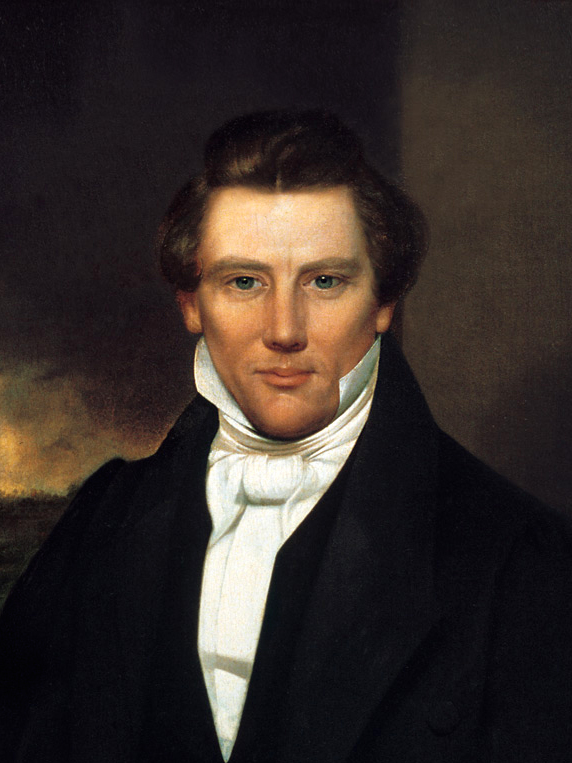
Bryce Blankenagel argues that reading Joseph Smith’s 1844 bid as a protest over Missouri understates his ambition. In his account, winning the presidency would have been a step toward establishing a religious political order. The council did election work, and Joseph publicly called for a form of government shaped by God and the people. Those are the strongest reasons to take the connection seriously. Naked Mormonism, episode 214
Why Joseph ran
In November 1843, Joseph asked several prospective presidential candidates what they would do for the Latter-day Saints, who had been driven from Missouri and had sought redress without success. The replies offered no commitment to intervene. On January 29, 1844, his supporters voted for independent electors and proposed Joseph as a candidate. The minutes show him discussing how to canvass the country. The Council of Fifty was organized on March 11, more than a month after that decision. Letter to Henry Clay · January 29 minutes · March 11 minutes
The public platform proposed expanding presidential power to suppress mobs without waiting for a governor’s request. That fits the experience of a minority seeking protection when state authorities had failed it. The platform also addressed prisons, banking, and ending slavery through compensated emancipation. Both the canvassing plan and the policy proposals make sense as efforts to win, even if a loss could still draw attention to the Saints’ grievances. General Smith’s Views · Church history of the campaign
What the council meant by theocracy
The council envisioned a civil kingdom guided by revelation. On April 11, Sidney Rigdon described the aim as forming a theocracy without interfering with existing governments. He spoke of seeking a place outside another government’s jurisdiction. The same day the council sustained Joseph as “our Prophet, Priest & King.” On April 25, it accepted Joseph’s revelation declaring the council members to be the constitution of the kingdom in place of a written charter. These were claims about civil authority with a religious foundation. Rigdon, April 11 · Council vote · April 25 revelation
Joseph also said that people should be free to choose their religion, and the council included three men who were outside the Church. On April 18 he distinguished the Church’s work of salvation from the kingdom’s civil role. This helps explain why he could expect divine guidance in government and still argue for freedom of conscience. It leaves a practical question about how rulers claiming divine authority would protect people who disagreed with them. The proposals never faced that test under Joseph. April 11 discourse · April 18 discourse · Church history of the council
What the council did for the campaign
On March 21 the council discussed sending people across the states to campaign for Joseph. On April 25 it considered starting newspapers in eastern cities to promote his candidacy. In April, Joseph publicly advocated “Theo.Democracy,” in which “God and the people hold the power.” His candidacy and his religious ideas about government plainly overlapped. March 21 minutes · April 25 minutes · April 15 letter
Joseph also spoke of setting up independent governments in the West and using religion as grounds to maintain their own laws. His council took self-government seriously. Compare the settings of the proposals. The council looked for a place beyond existing jurisdictions, while the campaign platform proposed reforms to the American government. The records leave open how Joseph would have tried to relate those two projects had he won. April 18 discourse · Campaign platform
How I’d answer a friend. “Joseph had a real reason to seek federal protection after Missouri, and he actually campaigned to win. I also take the council’s language about kingship and theocracy seriously. It supported his election, and he wanted religious principles to shape civil government. I’d ask where the record shows what he planned to do with the presidency. The minutes give us evidence of overlapping aims, while the claim that he meant to replace the U.S. government still needs a document connecting the two.” Practice the conversation