The underlying event, text, or document is securely dated. The religious interpretation still requires judgment.
Joseph Smith was a prophet
Joseph Smith was a prophet.
He got far too much right to explain away as luck. The Book of Mormon, its witnesses, fulfilled prophecy, ancient names and geography, later-recovered texts, and the temple all point in the same direction: God called Joseph Smith and revealed the Restoration through him.
A defense built to last
The evidence deserves a verdict
Joseph Smith does not need inflated stories or fragile arguments. His defense becomes stronger when the best evidence is separated from late memories and speculation. These labels show which claims can bear the most weight and why the full case is so difficult to dismiss.
Several specific details converge in a way that deserves a serious explanation, though it is not mathematical proof.
Meaningful in a cumulative case, but too broad, accessible, or dependent on interpretation to carry the argument alone.
Interesting enough to investigate, but the source date, proposed identification, or inference remains disputed.
Where to begin
Start with what Joseph Smith got right.
These are not five versions of the same argument. They come from different records and fields, yet they reinforce one another. Explaining away one does not explain the rest.
A large, structured book dictated in a compressed window
Nearly all of the present Book of Mormon text was dictated in about three months, producing a 588-page first edition.
Open the evidence 02 Strong convergenceJoseph named South Carolina, then repeated the warning in print
Doctrine and Covenants 87 linked war with South Carolina, North against South, foreign entanglement, slavery, and spreading conflict. A public letter repeated the warning weeks later.
Open the evidence 03 Strong convergenceNahom and the NHM inscriptions in Yemen
Ancient altars near Marib preserve the consonants NHM in the broader region of the modern Nihm tribal territory.
Open the evidence 04 Strong convergenceMahijah and Mahaway approach Enoch
Joseph’s Enoch text and the Book of Giants preserve similar names attached to a messenger who questions Enoch.
Open the evidence 05 Strong convergenceEleven named witnesses put their reputations behind the plates
Three witnesses described an angelic manifestation; eight described seeing and handling the plates.
Open the evidenceOne unfolding record
The texts came first. Many comparisons came later.
Book of Mormon
Main text dictated from April through June.
Moses and Enoch
An expansive Enoch narrative enters the record.
Civil War revelation
South Carolina is named twenty-eight years before secession.
Public warning
Joseph’s bloodshed warning appears in a newspaper.
Book of Abraham
Work begins on Abraham, premortality, and the divine council.
Jerusalem
Orson Hyde reaches the Mount of Olives.
Nauvoo endowment
Creation, covenant, and return to God become a ritual journey.
Stephen A. Douglas
Joseph names a future presidential bid and attaches a warning.
Book of Giants
Mahaway and Enoch emerge from ancient fragments.
NHM altars
Ancient tribal inscriptions are excavated in Yemen.
The full evidence room
The evidence keeps pointing in the same direction.
Joseph Smith got things right across scripture, prophecy, history, language, and temple worship. Open any file to see the evidence, why it supports his prophetic calling, and the sources behind it.
01 A large, structured book dictated in a compressed window Nearly all of the present Book of Mormon text was dictated in about three months, producing a 588-page first edition. Documented foundation
The case
The surviving record places the main dictation from early April through the end of June 1829. The text sustains narrators, migrations, sermons, wars, calendars, genealogies, embedded records, and callbacks across hundreds of pages. Whatever explanation one adopts, the speed and scale are facts that explanation must absorb.
Why it belongs
The strongest version of this argument is not that writing quickly is impossible. It is that a young man with limited formal schooling produced, by oral dictation, an unusually long work with substantial narrative and theological architecture.
What a strong defense admits
Joseph had years to think about the plates and told his family stories about the ancient inhabitants of the Americas. Speed rules out some casual theories, but it does not by itself prove translation from an ancient record.
02 The manuscript behaves like live dictation, not a copied draft The original manuscript contains hearing errors and was written rapidly with little punctuation. Documented foundation
The case
About 28 percent of the original manuscript survives. Its corrections and misheard words fit a scribe recording speech. The printer then received a second handwritten copy, and the typesetter supplied most punctuation and paragraphing. This leaves no known hidden novel manuscript from which Joseph simply read.
Why it belongs
A naturalistic authorship theory must explain sustained oral composition, memory, correction, and structure, not merely imagine Joseph writing and revising a conventional manuscript offstage.
What a strong defense admits
The manuscript establishes dictation, not the divine origin of the words. Oral performers can prepare material mentally, and some early planning cannot be excluded.
03 Eleven named witnesses put their reputations behind the plates Three witnesses described an angelic manifestation; eight described seeing and handling the plates. Strong convergence
The case
The two published statements distinguish a visionary experience from a more ordinary inspection. Several witnesses later broke sharply with Joseph Smith or the Church, yet continued to affirm their Book of Mormon testimony. That persistence makes a simple shared conspiracy harder to sustain.
Why it belongs
The witnesses do not force belief, but they prevent the plates from being treated as Joseph’s private assertion alone. Their estrangement is part of the evidence because it reduced their incentive to protect his reputation.
What a strong defense admits
The witnesses were connected by family and friendship, and nineteenth-century religious language about seeing can be read differently. Their statements deserve close reading rather than being called modern legal affidavits.
04 The book rewards sustained literary reading Narrators edit earlier sources, interrupt themselves, preserve competing viewpoints, and return to themes across generations. Supporting evidence
The case
Mormon, Nephi, and Moroni have recognizable editorial concerns. Letters, sermons, memoirs, annals, and flashbacks are nested inside a larger history. Readers who trace those voices find more design than the old caricature of an incoherent frontier imitation allows.
Why it belongs
Literary sophistication does not establish ancient origin, but it raises the explanatory burden. Any account of Joseph as author has to credit him with far more discipline, memory, and narrative intelligence than the dismissive version of his story permits.
What a strong defense admits
Modern authors can create layered narrators, and a literary achievement can still be modern. This evidence challenges a weak theory of authorship rather than proving a particular ancient source.
05 A dense, coherent theology centered on Christ Joseph’s scriptures repeatedly connect creation, fall, agency, atonement, covenant, resurrection, family, and divine presence. Supporting evidence
The case
The Book of Mormon is not merely a collection of religious opinions. Its sermons build a recognizable account of why mortality exists, why opposition matters, how grace and agency work together, and why Christ’s resurrection is universal. Later revelations extend that system toward priesthood, sealing, salvation for the dead, and temple worship.
Why it belongs
Believers see a revelatory architecture unfolding over fifteen years. The cumulative question is whether imposture, improvisation, religious genius, or prophetic calling best explains the system and its spiritual fruits.
What a strong defense admits
Coherence and religious power are theological evidence, not archaeological proof. Readers from other traditions may admire the system while rejecting its truth claims.
06 Joseph named South Carolina, then repeated the warning in print Doctrine and Covenants 87 linked war with South Carolina, North against South, foreign entanglement, slavery, and spreading conflict. A public letter repeated the warning weeks later. Strong convergence
The case
The revelation was recorded twenty-eight years before Confederate batteries fired on Fort Sumter. On 4 January 1833, Joseph also wrote to newspaper editor Noah C. Saxton that the United States would experience bloodshed not many years from then. Saxton printed the warning on 2 February 1833. The later war began in South Carolina, divided southern and northern states, brought foreign diplomacy into the conflict, and transformed enslaved people into agents and soldiers in their own liberation.
Why it belongs
This is Joseph’s strongest long-range prophecy because both records are early, public, and independently dated. Together they make it harder to dismiss the prediction as a story written after the event.
What a strong defense admits
South Carolina was already at the center of the Nullification Crisis, and slavery and sectional tension were visible. The prophecy is more impressive than a context-free lucky guess, but the context must be admitted.
07 Joseph warned Stephen A. Douglas about seeking the presidency Joseph said Douglas would aspire to the presidency and tied his future to how he treated the Latter-day Saints. Supporting evidence
The case
After discussing the Saints’ persecution in Missouri, Joseph told Stephen A. Douglas that he would seek the presidency of the United States. The surviving history says Joseph warned that if Douglas turned against the Saints, he would feel the weight of divine judgment. Douglas later became the Democratic nominee for president in 1860 after publicly denouncing the Latter-day Saints, then lost the election and died the following year.
Why it belongs
The prediction names a specific person, a specific national ambition, and a moral condition. It belongs in the cumulative case because Douglas did reach the exact political contest Joseph named.
What a strong defense admits
Douglas was already a rising and ambitious politician, so presidential aspiration was foreseeable. The judgment portion is theological interpretation, and the account survives through William Clayton’s journal and the later manuscript history rather than a signed statement from Douglas.
08 The Saints would be driven to the Rocky Mountains Joseph was recorded as foreseeing expulsion, settlements in the Rocky Mountains, and a powerful people there. Supporting evidence
The case
Within five years of the stated prophecy, the main body of Latter-day Saints entered the Salt Lake Valley. They then founded settlements throughout the Intermountain West. The outcome fits the prediction in a striking way.
Why it belongs
The prediction is specific about direction, displacement, and community building. It belongs in the case, but only with its documentary history attached.
What a strong defense admits
The surviving entry was compiled after Joseph’s death as part of the manuscript history, beginning in 1845. It is not a same-day journal entry, so it carries less weight than Doctrine and Covenants 87.
09 Orson Hyde was blessed to go to Jerusalem A blessing associated Hyde with Jerusalem years before he prayed on the Mount of Olives for the gathering of Israel. Supporting evidence
The case
Hyde crossed Europe and the Ottoman Empire, reached Jerusalem, and dedicated the Holy Land on 24 October 1841. His journey became one of the most unusual missions in early Church history and closely matched the destination and Israel-centered work named in his earlier blessing.
Why it belongs
The fulfillment joins an individual prediction to a difficult, voluntary mission that neither geography nor Church resources made easy.
What a strong defense admits
The exact date of the earliest blessing is uncertain, and Hyde actively chose to fulfill the calling. This is best treated as a realized prophetic commission, not a prediction insulated from human action.
10 Joseph went to Carthage expecting death Near-contemporary accounts preserve his statement that he was going like a lamb to the slaughter. Documented foundation
The case
Joseph left Nauvoo for Carthage, surrendered to civil authority, and was murdered with Hyrum on 27 June. Versions of his farewell were printed and circulated within weeks and months, giving this prediction substantially better attestation than many later reminiscences.
Why it belongs
The statement shows sober foreknowledge and willingness to face danger rather than the cartoon of a leader who thought he was untouchable.
What a strong defense admits
Joseph knew the threats, the militia climate, and his own history of violence and imprisonment. This is powerful testimony about his state of mind, but not an unknowable long-range prediction.
11 The forty-day meteor prediction Philo Dibble later recalled Joseph saying that stars would fall within forty days; the Leonid storm came on day thirty-nine. Contested lead
The case
The 13 November 1833 Leonid storm was spectacular across North America. Dibble’s account gives the prediction an exact window and places the event just inside it.
Why it belongs
If the recollection is accurate, the timing is remarkable. It is a good example of why source date matters as much as apparent precision.
What a strong defense admits
Dibble published the recollection in 1892, almost sixty years after the event. No contemporary copy of the prediction is known, so it should never be presented with the confidence given to an 1832 manuscript.
12 Nahom and the NHM inscriptions in Yemen Ancient altars near Marib preserve the consonants NHM in the broader region of the modern Nihm tribal territory. Strong convergence
The case
First Nephi places Nahom on an eastward-turning Arabian route and treats it as an existing name. Three altars from the Bar’an temple name a donor connected with the Nihm tribe and date to the general world of Lehi. The location lies near the only practical eastward turn toward the coast on leading route models.
Why it belongs
The convergence of consonants, antiquity, region, and route is much stronger than the claim that Joseph merely invented a vaguely Semitic place-name.
What a strong defense admits
The inscriptions name a tribe, not Ishmael’s grave, and NHM can be vocalized more than one way. The identification is an argued correspondence, not a sign reading “Book of Mormon Nahom.”
13 Sariah is attested as a woman’s Semitic name Jewish Aramaic records from Elephantine preserve ŚRYH as a female personal name. Strong convergence
The case
The Bible preserves related forms mainly as male names. Documents and an ostracon from the Jewish community at Elephantine show that the form could also belong to a woman. That is a clean fit for Lehi’s wife in a late seventh-century Israelite family.
Why it belongs
This is a modest but unusually specific hit. Joseph selected a name that sounded plausible in English and later evidence showed it was plausible in the relevant Semitic naming world.
What a strong defense admits
A plausible ancient name is not a unique identifier, and the English spelling does not prove direct linguistic descent. It works best as one independent point in a larger pattern.
14 Ancient scribes could speak of the “land of Jerusalem” An Amarna letter refers to a town belonging to the land or territory of Jerusalem. Strong convergence
The case
Critics once treated “the land of Jerusalem” as clumsy because Jerusalem is a city. Yet ancient Near Eastern correspondence used Jerusalem as the center of a surrounding territory. The phrase in Alma 7:10 therefore fits an attested geographic idiom.
Why it belongs
This does not prove the Book of Mormon, but it removes a supposed error and replaces it with a phrase at home in ancient territorial language.
What a strong defense admits
The Amarna letter predates Lehi by centuries, and the English wording depends on translation. It establishes plausibility, not direct dependence.
15 Alma appears as an ancient male name A Hebrew legal document from the Judean Desert names “Alma son of Judah.” Supporting evidence
The case
To modern English readers, Alma often sounds feminine because of European usage. A Bar Kokhba-era deed shows it functioning as a Jewish man’s name. That makes the two male Almas in the Book of Mormon less linguistically odd than critics once assumed.
Why it belongs
It is another case where later documentary evidence moved a Book of Mormon detail from supposedly implausible to demonstrably possible.
What a strong defense admits
The document is many centuries later than Lehi, and the name may not have the same linguistic derivation. Plausibility is the proper claim.
16 A Semitic language could be written in Egyptian script Papyrus Amherst 63 contains Aramaic language written in Demotic Egyptian characters. Strong convergence
The case
The Book of Mormon describes a record shaped by Hebrew language and Egyptian writing. Amherst 63 does not validate “reformed Egyptian” as a known script, but it demonstrates the broader scribal behavior that once sounded impossible: a West Semitic text encoded in an Egyptian writing system.
Why it belongs
The find supplies a real ancient analogue for cross-language script use and makes the Book of Mormon’s opening description less alien to ancient scribal practice.
What a strong defense admits
Amherst 63 is later and comes from a different community. It proves the general practice existed, not that Nephites used the same script or system.
17 Mahijah and Mahaway approach Enoch Joseph’s Enoch text and the Book of Giants preserve similar names attached to a messenger who questions Enoch. Strong convergence
The case
In Moses 6, Mahijah comes to Enoch and asks him to explain who he is and where he came from. In the fragmentary Book of Giants, Mahaway travels to Enoch for an oracle about troubling visions. The name, setting, role, and movement toward Enoch form a more specific convergence than a shared flood motif.
Why it belongs
The Qumran Book of Giants fragments were unavailable to Joseph and identified long after his death. This is among the most interesting later-recovered textual parallels in the Restoration.
What a strong defense admits
The names are not identical, both texts are fragmentary, and scholars do not generally accept direct textual identity. It is a striking correspondence, not a solved chain of transmission.
18 Joseph’s Enoch inhabits a much larger Enochic world The Book of Moses expands Enoch into a visionary prophet of the Son of Man, judgment, cosmic history, and the final return of Zion. Strong convergence
The case
Genesis gives Enoch only a few verses. Joseph’s version supplies sermons, visions, divine grief, a transformed city, the Son of Man, the flood, latter-day restoration, and heaven and earth meeting. Those themes feel far more at home beside the Enochic corpus than beside the sparse biblical notice.
Why it belongs
The breadth of the restored Enoch story is difficult to dismiss as a single borrowed name. It recovers the kind of apocalyptic world that later scholarship found surrounding Enoch in ancient Judaism.
What a strong defense admits
Richard Laurence published an English 1 Enoch in 1821. No evidence currently establishes that Joseph used it, but claims that all Enoch material was unavailable before 1830 are false.
19 A weeping God, a suffering earth, and a gathered Zion Moses 7 joins divine sorrow, personified creation, cosmic judgment, ascent, and a returning holy community. Supporting evidence
The case
The chapter’s God is not an unmoved abstraction. Heaven weeps over human violence, the earth cries out, Enoch sees generations, and Zion is received into God’s presence before returning in the last days. Later-known Jewish and Christian ascent traditions contain related constellations of cosmic lament, heavenly community, and transformed seers.
Why it belongs
The convergence is thematic rather than a single verbal match. Its force comes from the density of the cluster and the theological maturity of a text dictated near the beginning of Joseph’s career.
What a strong defense admits
Many of these motifs also occur separately in the Bible and Christian preaching. Parallels must be compared at the level of complete patterns, not counted as isolated proof texts.
20 The Enoch case is a whole dossier, not one name Joseph’s Enoch is a reluctant young prophet, record keeper, preacher, city builder, seer, and witness of Zion’s final return. Strong convergence
The case
A fair comparison must account for the complete profile. Enoch calls himself a lad who is hated and slow of speech, receives a divine commission, preaches repentance, preserves a book of remembrance in an Adamic language, gathers a covenant people, sees God weep over violence, watches Zion enter heaven, and foresees its return. Later Enochic and giant traditions place Enoch inside the same broad world of heavenly books, rebellious powers, commissioned preaching, cosmic judgment, ascent, and a preserved righteous community.
Enoch describes himself as young, hated, and slow of speech before becoming a forceful prophetic messenger.
He is sent to confront violence and rebellion, then calls a whole people into covenant.
The first generations preserve inspired memory, genealogy, language, and teaching rather than living without records.
Enoch does more than survive judgment. He creates a holy society defined by unity, righteousness, and care for the poor.
The city enters God’s presence and is promised a future reunion with the latter-day people of God.
The vision joins divine grief, a suffering earth, human agency, judgment, and redemption in one sustained scene.
Why it belongs
Any one feature can be explained as biblical expansion. The force comes from the density of the pattern inside a text dictated when Joseph was twenty-four, long before most of the comparative literature was available in English.
What a strong defense admits
An English translation of 1 Enoch existed in 1821, and several motifs have biblical roots. The comparative texts also come from different centuries. The responsible claim is cumulative convergence, not a word-for-word recovery of one lost manuscript.
21 Adam gathers his righteous family for a final blessing Joseph described Adam gathering the faithful generations, blessing them, prophesying their future, and receiving the Lord before his death. Supporting evidence
The case
Doctrine and Covenants 107 names Seth, Enos, Cainan, Mahalaleel, Jared, Enoch, and Methuselah in a final gathering at Adam-ondi-Ahman. Adam blesses them, the Lord appears, and Adam foretells what will happen to his posterity. The text adds that these things were written in the book of Enoch. Later Adamic testament traditions also remember a dying patriarch gathering his family, giving final instruction, transmitting sacred knowledge, and looking toward the future.
The account gathers seven righteous generations and presents Adam as the presiding patriarch.
The family meets shortly before Adam’s death to receive his last blessing and instruction.
Adam foretells the future of his posterity, and the account connects the event to an Enochic record.
The assembly culminates in divine presence rather than functioning as a private family farewell.
Why it belongs
Joseph did not merely assign Adam a location. He restored a full patriarchal scene built around family, priesthood, prophecy, record, and divine presence. That wider pattern is more important than any one verbal parallel.
What a strong defense admits
The ancient traditions are varied, often late, and do not identify Missouri. They support the shape of a final Adamic assembly, not the modern site identification by themselves.
22 Eve as wise participant in a fortunate Fall Joseph’s scriptures frame the Fall as the doorway to mortal joy, family, agency, and redemption rather than a disaster caused by a foolish woman. Supporting evidence
The case
Second Nephi teaches that the Fall made human life and joy possible. Moses 5 gives Eve a discerning speech about posterity, knowledge, redemption, and eternal life. Adam and Eve receive sacrifice, angelic instruction, covenant, and sacred clothing within a larger ritual story. Later study of Adam and Eve literature revealed a broad afterlife for many of these themes outside Genesis.
Why it belongs
The result is a distinctive and generous theology that restores Eve to the center of the human story and integrates fall, atonement, marriage, and embodied life.
What a strong defense admits
The “fortunate fall” had precedents in Christian theology, and the surviving Adam and Eve texts are diverse and often late. The case is a pattern of resonance, not a recovered word-for-word source.
23 Eve teaches the first family instead of disappearing from the story Joseph’s scripture gives Eve her own theological witness and presents Adam and Eve teaching their children together. Supporting evidence
The case
In Moses 5, Eve interprets the Fall in her own voice: without transgression there would be no posterity, knowledge, joy, or eternal life through redemption. The same chapter says Adam and Eve made these things known to their sons and daughters. Later Adam and Eve literature also preserves extended first-person speeches by Eve, family instruction, prayer, visions, and concern that the first family’s sacred memory survive.
Eve explains the meaning of mortality, knowledge, joy, posterity, redemption, and eternal life in her own words.
Adam and Eve teach their sons and daughters together, making revealed truth a family inheritance.
Joseph’s first generations keep records and transmit sacred knowledge rather than beginning as religiously silent figures.
Ancient and late antique stories likewise remember Eve as a speaker, teacher, visionary, and guardian of family memory.
Why it belongs
This is more than a favorable sentence about Eve. Joseph places her testimony at the foundation of the plan of salvation and gives the first family a living tradition of instruction and remembrance.
What a strong defense admits
The later texts are diverse and often survive in late manuscripts. They supply many details Joseph’s own text does not state, so the case should not claim that he reproduced every later scene or speech.
24 Lucifer’s rebellion becomes a coherent pre-earth story Joseph’s texts join heavenly authority, rebellion, agency, deception, a fallen host, and the mission of Christ into one drama. Supporting evidence
The case
Moses 4 presents Satan as a premortal figure who sought God’s honor, rejected human agency, rebelled, fell, and became the father of lies. Abraham 3 places that rebellion inside a divine council where one offers to preserve agency and another seeks the glory. The Book of Mormon adds the adversary’s disguises, secret combinations, captivity, and opposition to the plan of redemption. Together the texts form a continuous account rather than a handful of disconnected proof texts.
Why it belongs
The doctrine explains evil without making God its author and connects creation, agency, temptation, atonement, and judgment. Later Jewish and Christian traditions show that a much larger story of heavenly rebellion existed around the sparse biblical references.
What a strong defense admits
Most pieces have biblical or Christian precedents, and later accounts of the devil vary widely. The evidence lies in Joseph’s synthesis and theological architecture, not in claiming that no one before him had discussed a fall in heaven.
25 Cain’s murder becomes the first secret combination Joseph connects Cain, Satan, a secret oath, murder for gain, concealed identity, and an inherited network of violence. Supporting evidence
The case
Moses 5 expands Cain’s story into a covenant with Satan. Cain swears his followers to secrecy, kills Abel for material gain, takes the title Master Mahan, and passes the pattern into later generations through Lamech. The Book of Mormon had already described secret combinations as ancient, oath-bound systems that murder for power and gain. The two records interpret hidden organized violence as a recurring spiritual technology, not a single isolated crime.
Why it belongs
The connection gives the Book of Mormon’s political warnings a primeval origin and turns a short Genesis narrative into a sustained theology of secrecy, coercion, and predatory power.
What a strong defense admits
The Book of Mormon already connected Cain with secret oaths before Joseph dictated the Moses expansion, and expanded Cain legends existed in religious culture. Specific ancient comparisons still require careful dating and should not be treated as automatic proof.
26 Joseph’s Abraham recovers a much wider patriarchal world Joseph’s Abraham confronts family idolatry, faces sacrifice, is rescued by God, teaches astronomy, and sees the premortal council. Supporting evidence
The case
Genesis does not tell that full story. In Joseph’s account, Abraham’s own household turns to idols, priests try to sacrifice him, an angel rescues him, and God teaches him a revealed order of the heavens. The vision then reaches beyond astronomy to preexistent intelligences, a divine council, the purpose of earth life, agency, and the choice of a Redeemer. Jewish, Christian, and Islamic traditions outside Genesis also remember Abraham as an enemy of idolatry, a threatened victim, a recipient of heavenly knowledge, and an observer of the stars.
Abraham breaks with the worship practiced by his own fathers and seeks a different priestly inheritance.
Instead of appearing only as the father who nearly sacrifices Isaac, Abraham first becomes the intended victim of an idolatrous priest.
An angel releases Abraham and God’s judgment falls on the altar and priest who tried to kill him.
The heavens become an ordered teaching device for divine government rather than an isolated lesson in stargazing.
Abraham sees intelligences before birth, the planning of the earth, a chosen Redeemer, and the protection of agency.
Why it belongs
No single parallel settles the Book of Abraham question. The cumulative pattern matters because Joseph’s narrative repeatedly enters Abrahamic traditions that are absent from Genesis and became much easier for English readers to compare after his lifetime.
What a strong defense admits
Some Abraham legends were available through Josephus and other sources. The surviving Joseph Smith papyri are Egyptian funerary texts, so this argument concerns the revealed narrative and its ancient resonances. It does not establish a conventional line-by-line translation of the surviving fragments.
27 Persistent Semitic-style turns of phrase The text repeatedly uses forms such as “dreamed a dream,” if-and conditionals, compound prepositions, and name-centered wordplay. Supporting evidence
The case
Some constructions resemble literal translation from Hebrew or another Semitic language more than polished nineteenth-century prose. The patterns occur across narrators and include cognate accusatives, repeated “and,” possessive constructions, and possible plays on names such as Jershon and Nahom.
Why it belongs
A broad, recurring linguistic texture is more interesting than one phrase. It fits the book’s claim that its writers thought in a Semitic language while preserving their record through another script.
What a strong defense admits
The King James Bible heavily shaped the English text and can explain many biblical-sounding constructions. Proposed wordplays also depend on uncertain spellings and etymologies. Individual examples should not be oversold.
28 Alma 36 turns on the name of Jesus Christ Alma’s conversion narrative is organized through inverted themes that move from bondage to Christ and back out to deliverance. Supporting evidence
The case
The chapter’s repetitions are not decorative. They make remembering Christ the hinge between torment and joy, captivity and liberation, falling and rising. Later analyses differ in exact boundaries, but the chapter plainly uses extensive recurrence and reversal to carry its theology.
Why it belongs
The structure is evidence of purposeful literary craftsmanship inside orally dictated scripture. It is strongest as a reading of the chapter, not as a secret code.
What a strong defense admits
Chiasmus was discussed in English biblical scholarship before 1830, including John Jebb’s 1820 book, and inverted structure is not uniquely Hebrew. Critics also dispute some elaborate charts of Alma 36.
29 Jacob 5 sustains a demanding olive-tree allegory The longest allegory in scripture uses pruning, grafting, transplanting, dunging, decay, and harvest to tell Israel’s covenant history. Supporting evidence
The case
The chapter holds a complicated horticultural world together for seventy-seven verses while making each intervention serve the master’s grief and patience. Specialists have found much of the olive culture recognizable, even where the allegory intentionally uses unusual practices for theological effect.
Why it belongs
The combination of technical detail, sustained symbolism, and emotional theology adds to the book’s literary and cultural depth.
What a strong defense admits
The Bible already uses olive imagery, and Joseph lived in an agricultural culture. Some procedures are allegorical reversals of ordinary practice, so “perfect horticultural manual” is the wrong claim.
30 King Benjamin’s address works as covenant renewal A temple assembly, royal succession, sacrifice, public reading, covenant making, a new name, and a written census form one ceremony. Supporting evidence
The case
Mosiah 1 through 6 does more than preserve a sermon. Families gather by tents at the temple, a king gives a final account, his son is installed, the people fall and rise, a covenant creates a new identity, names are recorded, and the assembly is dismissed. The pieces fit an ancient covenant-festival pattern.
Why it belongs
The full scene shows ritual intelligence and institutional detail that a list of isolated parallels would miss.
What a strong defense admits
Biblical coronations, covenant scenes, and camp meetings supplied possible models. The argument depends on the density and integration of the scene, not the uniqueness of any one feature.
31 The endowment turns Eden into a journey back to God Joseph joined creation, fall, covenant, sacred clothing, instruction, priesthood, and entry into divine presence in one ritual ascent. Strong convergence
The case
The Nauvoo endowment made the plan of salvation participatory. Men and women moved through a covenant story rather than only hearing a sermon about it. Its goal was not fraternal belonging but sanctification, sealing, and preparation to enter God’s presence, themes with deep biblical and ancient temple roots.
Why it belongs
Believers see restored content: a ritual map of exile and return that binds scripture, embodiment, family, priesthood, and Christ together.
What a strong defense admits
Joseph became a Freemason shortly before introducing the Nauvoo endowment, and the ceremonies share forms. The responsible claim is that he adapted familiar ritual grammar to a radically different covenant theology, not that no modern influence existed.
32 Sacred clothing links Eden, priesthood, atonement, and the temple Joseph joined Adam and Eve’s covering, priestly identity, covenant remembrance, and ritual return to God. Supporting evidence
The case
Genesis gives Adam and Eve coats of skins after the Fall, and Exodus clothes priests for service in God’s presence. Joseph’s restored scripture places the Eden covering inside a larger sequence of agency, sacrifice, angelic instruction, repentance, covenant, and redemption. The Nauvoo endowment then makes sacred clothing part of an embodied covenant journey back into divine presence. Ancient temple traditions likewise use vesting to mark purification, authority, transformed identity, and readiness to approach the holy.
The garment appears after transgression and before the first family’s life of sacrifice, work, teaching, and covenant.
Biblical vesting marks people who are prepared and set apart to minister before God.
The clothing functions as a continuing reminder of dependence on divine covering and promised redemption.
In the endowment, sacred clothing belongs to a complete movement from creation and exile toward covenant and divine presence.
Why it belongs
The restored pattern does not treat clothing as decoration. It becomes a portable reminder that the worshipper has entered a covenant, depends on Christ’s covering, and is preparing for priestly life in God’s presence.
What a strong defense admits
The biblical starting points are visible, and sacred vestments were not unknown in Joseph’s world. Freemasonry also influenced the ritual form of the Nauvoo endowment. The case is Joseph’s integrated temple theology, not the claim that every outward feature had no modern precedent.
33 Women and men enter a shared priestly order Joseph extended temple covenants, ritual authority, sealing, and the promise of divine glory to women as well as men. Supporting evidence
The case
The mature Nauvoo vision required both women and men. Women received and administered temple ordinances, participated in an anointed covenant community, and stood with men in a theology of eternal kinship. That was a significant religious development in Joseph’s environment.
Why it belongs
The temple was not an ornament added to the Church. It completed a theological architecture in which salvation is communal, embodied, familial, and directed toward becoming like God.
What a strong defense admits
Joseph’s practice, especially plural marriage and institutional male authority, raises serious historical questions. A strong case should not use temple inclusion to erase those tensions.
34 Premortality and the heavenly council become a full drama Abraham 3 presents preexistent intelligences, divine deliberation, a chosen Redeemer, agency, and mortal testing. Supporting evidence
The case
Biblical passages hint at a heavenly council and life before birth. Joseph’s text brings them together into a continuous scene that explains human dignity, freedom, the purpose of earth, and Christ’s role before creation. Later study of Jewish and Christian ascent and council traditions made this religious world more visible.
Why it belongs
The doctrine became structural for Latter-day Saint thought rather than a marginal speculation. It connects creation, the problem of evil, agency, Christ, and human destiny.
What a strong defense admits
Council imagery is present in the Bible and was discussed by Christians before Joseph. Later apocryphal texts vary in date and theology, so resemblance does not establish a lost common manuscript.
35 The plan of salvation appears before the New Testament era Book of Mormon prophets before Christ teach a developed account of the Fall, agency, Messiah, atonement, resurrection, judgment, and mortal probation. Supporting evidence
The case
Lehi and Jacob teach opposition, agency, the fortunate Fall, resurrection, and redemption through the Holy Messiah. Alma describes mortality as a probationary state and joins law, justice, mercy, repentance, resurrection, and atonement into one argument. The record attributes related teachings to prophets such as Zenos and Zenock whose writings are not in the present Bible. Later discoveries made it much harder to assume that ancient Jewish religion was limited to the books and ideas preserved in the later Protestant Old Testament.
Mortality creates the conditions for family, freedom, growth, joy, repentance, and redemption.
Salvation rests on the merits, mercy, and grace of the Holy Messiah rather than obedience alone.
Earth life becomes a real period of agency and preparation before resurrection and judgment.
Alma’s argument explains how atonement preserves moral law while making repentance and restoration possible.
The record openly identifies sources and prophets outside the present biblical canon.
Why it belongs
Joseph’s book presents Christianity as the fulfillment of an older covenant story, not a religion invented after Jesus. Its pre-Christian sermons are among the most systematic theological passages he produced at the beginning of his career.
What a strong defense admits
Many surviving comparative texts come from the Christian era and may contain Christian editing. A wider ancient scriptural world makes the Book of Mormon claim more plausible, but it does not prove that every doctrine appeared on a specific brass-plate source.
36 The brass plates as a wider Israelite library The Book of Mormon quotes lost prophets and gives early Israelite figures a richer messianic theology than the present Hebrew Bible preserves. Contested lead
The case
Zenos, Zenock, Neum, and Ezias appear as prophets outside the current canon. Lehi and Nephi treat the brass plates as a substantial northern-Israelite archive, and their descendants preserve traditions about Messiah, fall, atonement, and resurrection. Later apocrypha shows that ancient Jewish scriptural culture was genuinely larger and more fluid than the later canon.
Why it belongs
This makes the Book of Mormon’s claim to a lost library conceptually plausible and opens a productive comparison with Enochic, Adamic, and Abrahamic literature.
What a strong defense admits
Some modern reconstructions go further, proposing a detailed lost library and deliberate scribal suppression. The surviving evidence supports a wider scriptural world, but it does not establish every proposed title, editor, or act of removal.
Nothing matches that search yet. Try a broader word or another category.
The extended prophecy ledger
More fulfilled promises, with the source quality left attached.
These accounts add real weight to the cumulative case, but most survive through later recollection or involve people who helped fulfill the commission. They belong here without being treated as equal to the dated Civil War revelation.
The Liberty Jail prisoners would survive
Accounts from the Missouri imprisonment remember Joseph expressing confidence that the jailed Church leaders would not be killed and would eventually escape their captors.
Joseph Smith, Hyrum Smith, Caleb Baldwin, Alexander McRae, and Lyman Wight survived the imprisonment. Their guards allowed them an opportunity to escape while they were being transferred in April 1839.
The survival and escape are secure. The strongest wording of the prophecy comes through later recollection, so the outcome should not be presented as if every sentence survives in a same-day prison journal.
Heber C. Kimball would open the work in England
Joseph called Heber C. Kimball to lead the Church’s first mission outside North America at a moment when Kimball felt unequal to the assignment.
Kimball and his companions established congregations across northern England and baptized roughly fifteen hundred people before his first return to the United States.
The call and mission results are well documented. Fuller wording about the exact number of future converts appears in later biographical reporting, so this file treats the event as a realized prophetic commission.
Dan Jones would live to serve in Wales
On the final night before his death, Joseph reportedly told Dan Jones that he would yet see Wales and fulfill the mission appointed to him.
Jones was ordered out of Carthage Jail the next morning, escaped an ambush, and later became one of the most productive missionaries in Wales.
Jones preserved the exchange later, and the detailed martyrdom account was compiled after Joseph’s death. The result is striking, but its documentary layer should remain visible.
Willard Richards would survive flying bullets
A later account says Joseph told Willard Richards that bullets would fly around him, friends would fall on either side, and his clothing would not be pierced.
Richards survived the attack at Carthage Jail with only a minor wound while Joseph and Hyrum Smith were killed and John Taylor was badly wounded.
Joseph Smith Papers notes that the prediction is not found in a contemporary record. It appears in accounts recorded years later, so it belongs in the ledger as a contested memory, not a foundation claim.
Eliza R. Snow would visit Jerusalem
Eliza R. Snow later wrote that Joseph told her she would one day visit Jerusalem, even though such a journey would have seemed remote in the 1840s.
Snow traveled through the Holy Land in 1872 and participated with other Latter-day Saints in prayer for Jerusalem and the gathering of Israel.
The journey is well documented. The prediction is preserved in Snow’s later autobiographical account, not in a currently verified contemporary entry, so it remains a meaningful but lower-confidence memory.
The apocrypha question
Parallels are most persuasive when they are specific, early, and clustered.
Finding “light,” “angels,” or “covenant” in two religious books proves almost nothing. Finding a similarly named messenger who travels to Enoch for an answer is different. The useful question is not, “Can I find anything alike?” It is, “How many independent details align, and what sources were actually available?”
- Was Joseph’s text securely recorded before the comparison text was recovered?
- Are the details unusual enough to matter?
- Do they perform the same role inside the story?
- Have plausible nineteenth-century sources been checked?
A defense that holds up
Joseph's case does not need weak claims
“Chiasmus was unknown in Joseph’s day.”
Too strong. English books discussed inverted biblical structure before 1830. Alma 36 is still sophisticated, but the responsible argument is literary, not secret knowledge.
“Every prophecy comes from a contemporary record.”
It does not. The Civil War revelation is early and secure. The meteor statement and several other dramatic stories survive only in much later memory.
“An ancient parallel automatically proves a lost source.”
Shared religious motifs travel widely. Specific names, roles, sequences, and clusters matter more, and even those require an access check.
“The surviving papyri conventionally translate as Abraham.”
They do not. The faithful argument must address revelation, catalyst theories, missing material, and the ancient resonances of Joseph’s text without misstating Egyptology.
Say it plainly
Joseph Smith was a prophet
“I would not ask you to believe Joseph Smith because of one coincidence. I would ask what best explains the whole stack: the speed and structure of the Book of Mormon, witnesses who kept their testimony after leaving him, a Civil War revelation recorded in 1832, ancient names and geography that aged better than critics expected, Enoch material that became more interesting after later discoveries, and a temple theology that ties the entire Restoration together.”
Lead with one strong item. Do not unload twenty claims at once.
State the caveat yourself. Trust rises when the seam is visible.
Return to the cumulative question. Which explanation fits the full record?
The final test
History supports the claim. God can confirm it.
Joseph Smith was a prophet of God. He brought forth the Book of Mormon, restored the gospel of Jesus Christ, and taught people to seek revelation for themselves. Read the evidence. Test the fruit. Then ask God whether Joseph was truly called.
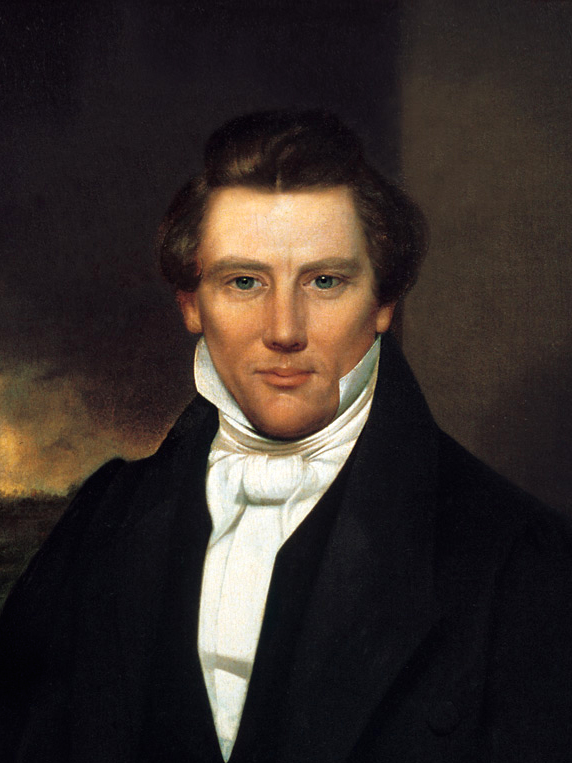
Portrait source: Wikimedia Commons