Put the question in the room

Make the assumption visible.

These are sourced analogies used by Latter-day Saint writers and apologists. Each one gives you a short setup, the question to ask, and the limit you should admit.

An analogy can expose a hidden premise. It cannot prove the whole argument. Use the picture, ask the question, then return to scripture and evidence.

8 sourced lessons

Conversation library

Find the picture that fits the claim.

Filter by the issue in front of you. The "Say it" line is written for a live conversation, and every card links back to the full argument.

Nature of God Hayden T. Carroll
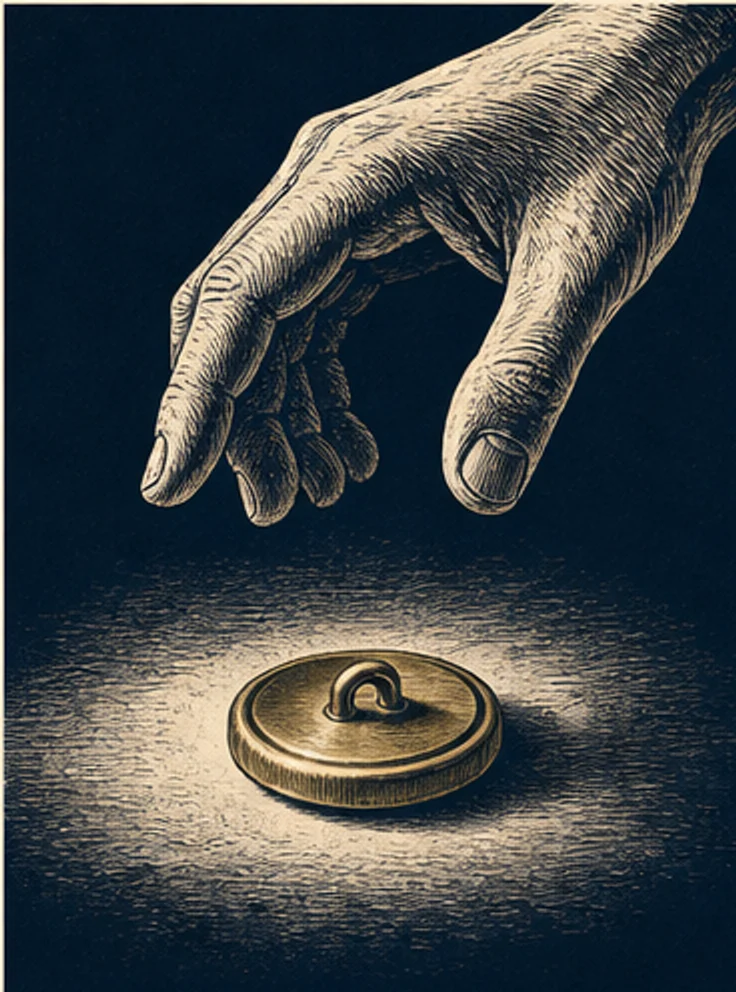
An engraved hand hovering over a single brass button
Visual cue

The creation button

Set it up

A button will bring one person into existence. Before pressing it, you know with certainty that the person will end in irreversible eternal torment. You are free not to press it, and refusing costs you nothing.

Ask

Would pressing the button will that person's greatest good?

The button moves the discussion one step back. Human freedom may explain the person's later choices, but it does not by itself explain God's earlier choice to create that person with complete foreknowledge.

Say it

Before we talk about what the person freely chooses, ask about the earlier decision. If you knew the final outcome and did not have to create that person, would you press the button?

Know the limit

Use this only when the other person affirms the full package: exhaustive foreknowledge, freedom not to create, creation from nothing, irreversible eternal torment, and God willing each person's good.
Restoration Devin Barnes, Latter-day Logic
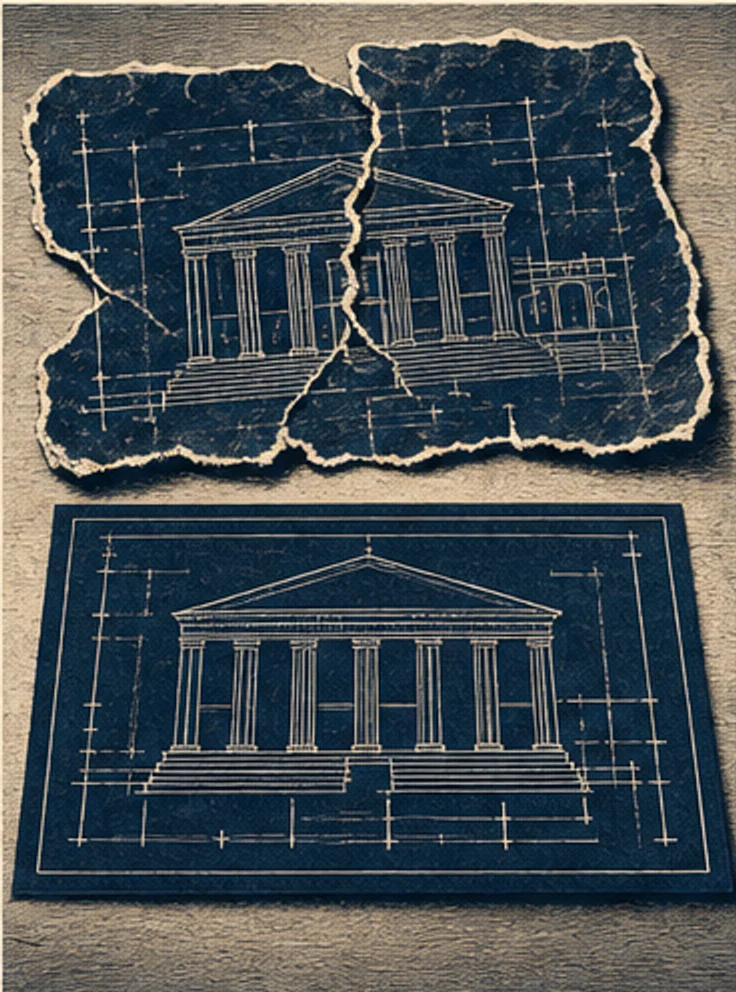
A torn building plan resting above an intact blueprint
Visual cue

The damaged blueprint

Set it up

An architect gives a crew the plans for a building. The plans are damaged, so the crew fills the gaps and builds what it can. The architect later returns with an intact copy. The first crew rejects it because the restored building does not resemble the structure they built from fragments.

Ask

Should the damaged building judge the intact plans, or should the plans judge the building?

The lesson explains why a restored church would look wrong to people who inherited a later form of Christianity. Familiarity with the later building cannot settle whether the original plan was preserved.

Say it

If the original church was altered, a restoration should challenge the later version. Saying "it does not look like our church" assumes your church is already the untouched standard.

Know the limit

This illustrates the Restoration claim. It does not prove that an apostasy happened. Establish that case from scripture, authority, and history.

Restoration Devin Barnes, Latter-day Logic
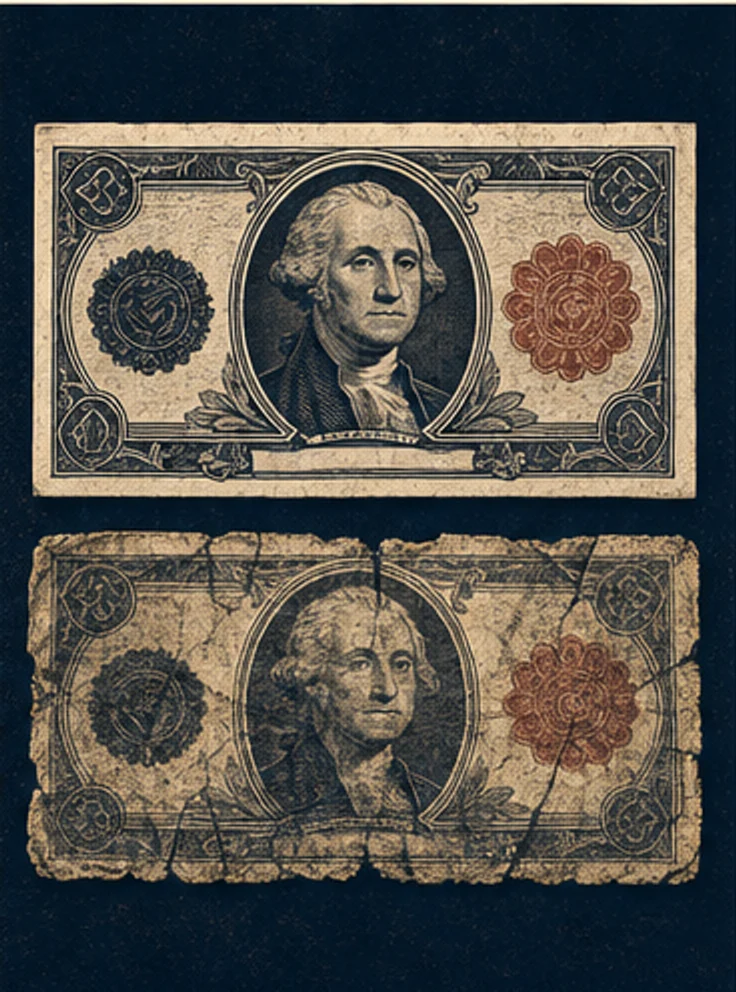
A crisp engraved banknote above a worn counterfeit
Visual cue

The familiar counterfeit

Set it up

A treasury issues real currency. Counterfeits circulate for so long that people treat them as normal. When the treasury issues authentic notes again, the public rejects them because they do not look like the money everyone has grown used to.

Ask

Does familiarity make the circulating note authentic?

Age and acceptance do not prove authority. A belief can become culturally standard without becoming the original Christian teaching.

Say it

A later belief does not become apostolic just because Christians have repeated it for centuries. We still have to compare it with the earliest sources and ask who had authority to define it.

Know the limit

Do not call other Christians fake people or assume every later development is corrupt. The analogy is about authority and standards, not sincerity.

Scripture Devin Barnes, Latter-day Logic
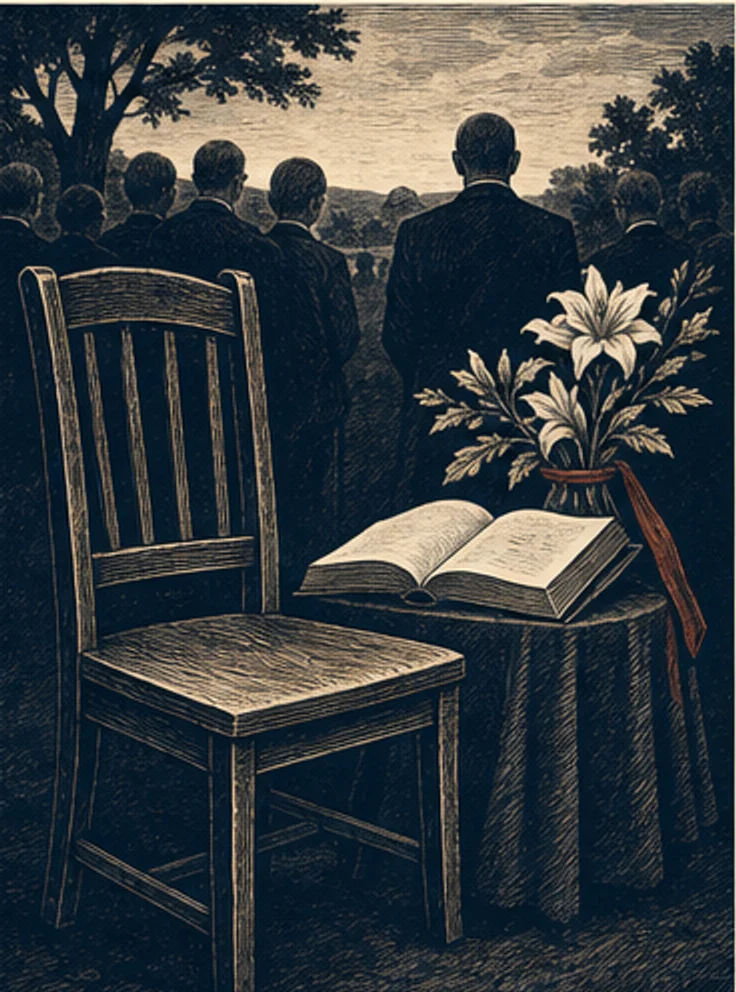
An empty chair and open memory book at a quiet funeral
Visual cue

The unheard eulogy

Set it up

At your grandfather's funeral, an old friend begins telling a true story you have never heard. You would not interrupt and demand that no one tell you anything more about someone you love.

Ask

Why should love for earlier scripture require rejecting any further true witness of Christ?

Additional information is not automatically false because it is additional. A new book still has to be tested, but "I have not heard this before" is not a test.

Say it

If another ancient witness truly testified of Christ, loving the Bible would give me a reason to examine it, not a reason to reject it unread.

Know the limit

An unfamiliar story can still be false. This answers automatic rejection of additional scripture; it does not authenticate the Book of Mormon by itself.

Salvation Blake T. Ostler
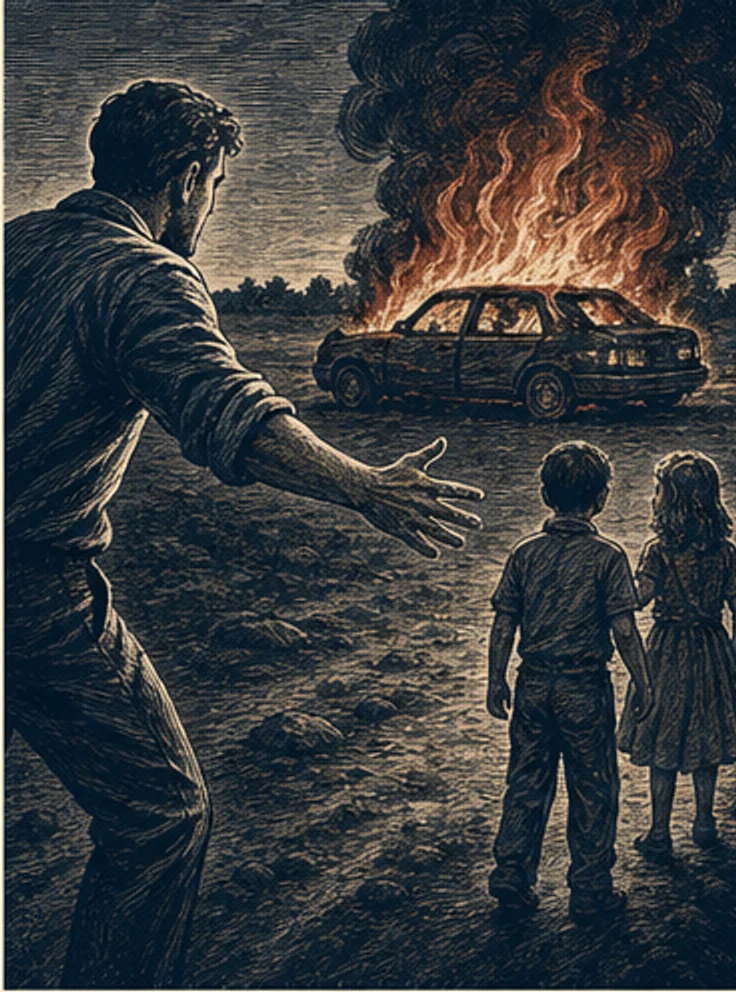
A parent reaching toward two children beside a burning car
Visual cue

The burning car

Set it up

A parent can pull both children from a burning car. Saving both is within her power and carries the same cost, yet she chooses one child and leaves the other behind.

Ask

Could we say that the parent wills the rescue of both children?

Ostler uses the comparison against a form of Calvinism in which God can save every person efficaciously but chooses to give saving grace only to the elect.

Say it

The issue is not whether rescue is owed. The issue is whether someone who can rescue both at no greater cost can leave one behind and still be described as willing the rescue of both.

Know the limit

Calvinists distinguish justice from mercy and deny that God owes saving grace to anyone. Use the illustration to clarify the dispute over divine love, not as a substitute for arguing the doctrine.

Prophetic claims A comparison grounded in the biblical and Restoration accounts
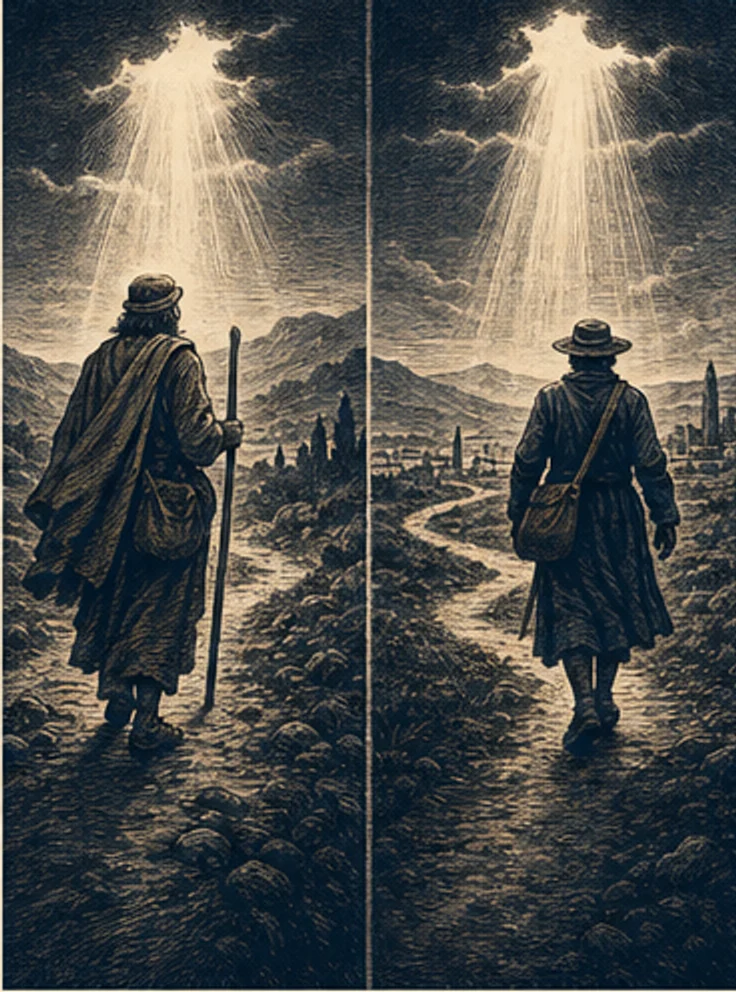
Two messengers on separate roads beneath beams of heavenly light
Visual cue

Give Paul and Joseph the same test

Set it up

Paul said the risen Christ appeared to him, that he received the gospel by revelation, and that he was called after Jesus' mortal ministry. Joseph Smith also reported a divine appearance, heavenly messengers, revelation, and a commission outside the existing religious establishment.

Ask

What neutral test accepts Paul's claim while ruling Joseph's claim out before his evidence is heard?

The parallel does not make the two claims identical. It asks for a consistent standard. Timing, unfamiliar doctrine, or a reported heavenly appearance cannot disqualify Joseph if those features do not disqualify Paul.

Say it

I am not asking you to accept Joseph because you accept Paul. I am asking what test you use for Paul, and whether Joseph gets that same test before the conclusion is announced.

Know the limit

Paul and Joseph lived in different settings and offered different bodies of evidence. Also, the decision about circumcision in Acts 15 was conciliar, not Paul acting alone. The comparison demands equal standards; it does not erase those differences.

Epistemology Jacob Hansen, Collective Witness Model
Three compass bearings converging on one point of a survey map
Visual cue

Triangulate the claim

Set it up

One bearing can leave a location uncertain. Several independent bearings that converge give a much stronger fix. Hansen applies that picture to intuition, sense data, reason, authority, and outcomes.

Ask

Which independent witnesses converge on this belief, and which witnesses genuinely count against it?

A feeling, a quotation, or one argument should not become a trump card. Confidence grows when different kinds of evidence converge and survives honest attempts at disconfirmation.

Say it

I do not rest this on one feeling or one authority. Let us check the text, the reasoning, the historical evidence, the fruits, and the spiritual witness together.

Know the limit

This is not majority rule. Weak or dependent witnesses do not become strong by being counted several times, and the right weight depends on the question being asked.

Epistemology Devin Barnes, Latter-day Logic
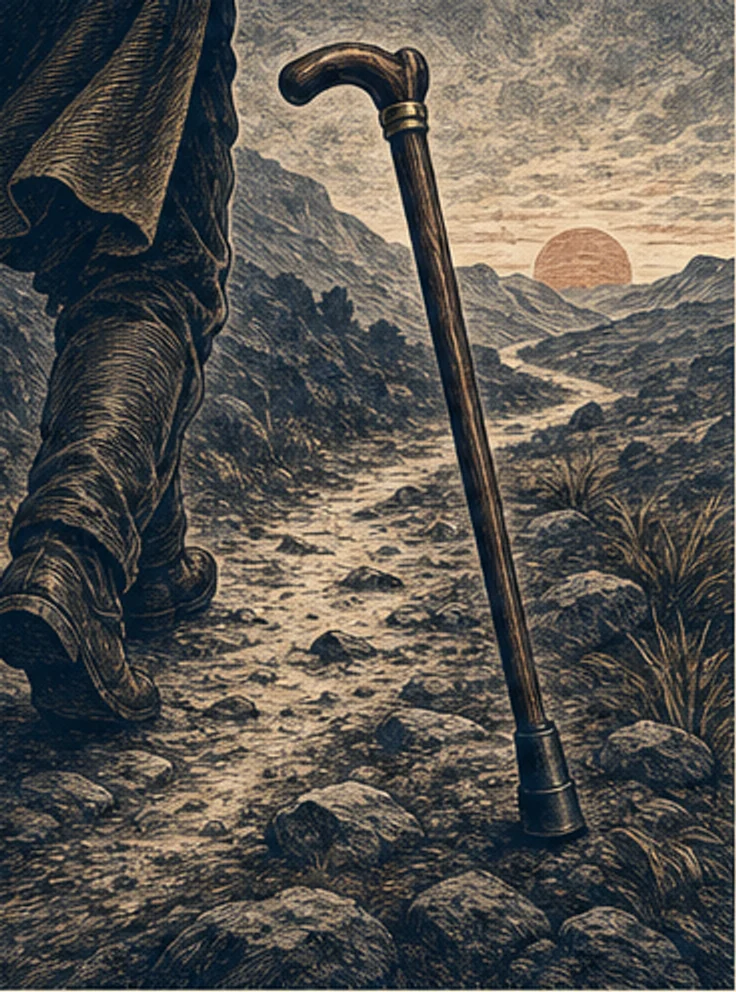
A walking cane supporting a traveler on a rough mountain path
Visual cue

The cane and the walk

Set it up

A cane can steady a person while walking. If the person hangs every ounce of weight on that one cane, a single kick can send everything down.

Ask

Is your faith resting on Christ and a cumulative witness, or on one favorite argument?

An apologetic argument can support faith without becoming its entire foundation. If one historical theory or clever proof changes, the whole testimony need not collapse.

Say it

Evidence matters, but I do not make one argument carry my whole faith. My confidence rests on a wider case, and each part can be examined honestly.

Know the limit

Do not use this to excuse belief without evidence. Hansen's Collective Witness Model supplies the needed balance: reason and evidence are part of the walk, not disposable decorations.