The short answer
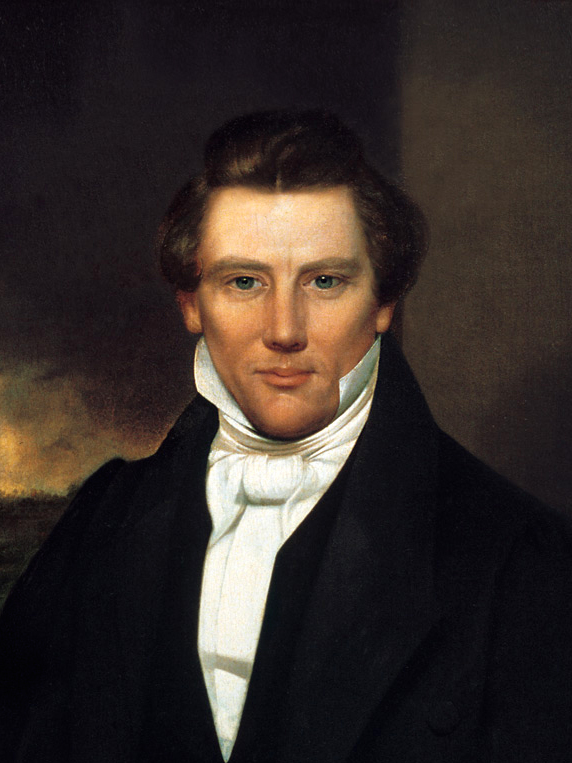
Joseph Smith helped run and promote the Kirtland Safety Society. It failed and people lost money. Woodruff’s January 1837 journal reports that Joseph claimed a revelation about the bank and made a conditional assurance. A later letter from former officer Warren Parrish attributes a much stronger prediction to Joseph. The failure is documented. The exact promise is disputed.
Check three records
- The appeal. Joseph invoked the Holy Spirit in urging members to come to Kirtland and invited them to buy stock. Read the investment appeal
- The reported promise. Woodruff’s journal, the September conference minutes, and Parrish’s letter give different evidence about what Joseph said. Compare the accounts
- The judgment. The case was about acting as an officer of an unauthorized bank. Joseph’s docket records $1,000 plus costs. Read about the collapse and verdict
What Joseph asked people to do
Joseph Smith and Sidney Rigdon helped organize a bank in Kirtland, Ohio, in 1836. The organizers never obtained a state bank charter. On January 2, 1837, the shareholders reorganized as the Kirtland Safety Society Anti-Banking Company, a joint-stock company, and began issuing notes that month. Joseph signed notes as treasurer. In a published appeal he invoked the Holy Spirit in urging members to come to Kirtland and explicitly invited them to buy stock. People who heard that appeal had reason to take his encouragement seriously. Articles of agreement and postscript · Surviving notes
Did Joseph promise the bank would succeed?
- January 6, 1837. Wilford Woodruff heard Joseph say he had received the word of the Lord about the society, including an audible voice. Woodruff says Joseph did not disclose the message, but said “all would be well” if they heeded the commandments given that morning. The line about becoming the “greatest of all institutions on EARTH” appears in Woodruff’s ensuing prayer, after he finishes reporting Joseph’s remarks. Woodruff’s journal, p. 125
- September 3, 1837. Apostle John F. Boynton said he had been told the bank could never fail, regardless of what the men running it did. The minutes leave his source unnamed. Joseph said he had given no authority to publish such a statement and that he had always said the institution could stand only if conducted on righteous principles. A letter from Mary Fielding in June also reports that Joseph was unsure it would recover. Conference minutes and note 10
- February 1838. Warren Parrish, a former officer who had broken with Joseph, wrote that he personally heard Joseph say God instructed him to establish a bank that would “swallow up all other Banks” except the Bank of Monroe and outlast its rivals. That is the strongest explicit claim in these accounts. It came after the failure, and it is unclear whether Parrish was recalling the same occasion Woodruff described. Parrish’s letter, printed February 15
Taken as Parrish describes it, the prediction failed. Utah Lighthouse Ministry and LDS Discussions both cite his account. Those citations trace back to the same recollection. The earlier Woodruff journal attests to a revelation claim and a conditional assurance, and leaves the revelation’s specific wording unknown. Utah Lighthouse Ministry · LDS Discussions
A later recollection that the notes would one day be “as good as gold” is a separate claim. Brigham Young’s 1849 history records a plan to put Kirtland notes into circulation in Utah and treats that as fulfillment. Reusing some notes in Utah did not make the Ohio bank survive. Brigham Young’s manuscript history, January 6, 1849
Why the bank failed and what the court ruled
The society had limited reserves of coin for redeeming notes and trouble getting the public to accept them. The national Panic of 1837 made a shaky institution more vulnerable. Joseph and Rigdon left office by early July. Their successors extended more loans and put more notes into circulation as reserves dwindled. The society closed that summer, leaving investors and note holders with losses. Joseph publicly warned against accepting its notes in August. His warning came after his earlier appeal to invest. Joseph Smith Papers, introduction to the society · Joseph’s August notice
Parley P. Pratt’s May letter shows the pressure on individual members. He feared losing his home over a land purchase from Joseph financed through the society and accused Joseph of using religious influence in financial dealings. Pratt later reconciled with Joseph. LDS Discussions describes members losing their money and homes. Pratt’s letter documents one person’s fear and financial exposure. Measuring the scale of losses would require more records about individual outcomes. Pratt’s May 23 letter · LDS Discussions
Analyzing Mormonism quotes Parrish’s separate allegation that Joseph overstated the society’s coin reserves, claiming $60,000 when Parrish said it had at most $6,000. That is a specific allegation of misrepresentation. The surviving stock ledger records subscriptions and payments. Its editors explain that recorded cash could include banknotes as well as coin, so a ledger total alone would fail to verify the coin balance Parrish describes. Analyzing Mormonism · Stock ledger and editorial introduction
In October 1837 a jury found against Joseph and Rigdon in suits brought under Ohio’s law against acting as officers of an unauthorized bank. Joseph’s docket records a $1,000 judgment plus costs, and Rigdon also faced a $1,000 judgment. The statute and docket identify the legal issue. To assess a promise of success or a claim of intentional fraud, ask for evidence specific to that charge. Case introduction · Joseph’s court docket
A Latter-day Saint response
“Joseph helped run and promote the bank. People lost money, and the court held him liable for unauthorized banking. I’d take that seriously. To evaluate the claim that he promised it would succeed, I’d read Woodruff’s January journal and Parrish’s later letter together. They agree that Joseph claimed a message from God about the bank. They give different accounts of what he told people to expect. The failure is clear. What we can attribute to Joseph as a prediction is the disputed part.”